
2026-04-08
Diabetic Eye Disease: Why Regular Eye Exams Matter
Diabetic and skipping eye check-ups? Big mistake. Here's what happens inside your eyes & why regular exams can save your sight.


Diabetic and skipping eye check-ups? Big mistake. Here's what happens inside your eyes & why regular exams can save your sight.
So here's something that makes us genuinely angry.
We had a patient last month. Let's call him Rohan. 52 years old. Diabetic for 11 years. Sweet guy pun intended. He managed his sugar reasonably well. His physician was happy. His HbA1c numbers looked decent.
Know when he last got his eyes checked?
Never.
Eleven years of diabetes. Not one eye exam. Not one. And he's not some careless person he's an educated, well-meaning guy who simply didn't know. Nobody told him. Not his family doctor. Not his diabetologist. Nobody.
When he finally walked into our clinic in Ballygunge you know why he came? Because he started bumping into furniture on his left side. He thought he needed new glasses.
He didn't need glasses. He had diabetic retinopathy. Both eyes. One eye was already in the advanced stage with fluid leaking into his macula. The damage? Permanent. We could treat what was left, slow things down, but that lost vision? It wasn't coming back.
Eleven years. That's how long his eyes were screaming for help while nobody listened.
And Rohan isn't rare. We see this story repeat itself in our Kolkata clinic week after week after week.
That's why we're writing this. Not as a medical lecture. But as people who are frankly tired of seeing preventable blindness.
Okay let me break this down without sounding like a textbook.
You've got diabetes. Your blood sugar fluctuates sometimes high, sometimes okay, sometimes all over the place. You already know what that does to your kidneys, your heart, your nerves.
But your eyes? Most people forget about their eyes.
Here's what's happening behind the scenes.
Your retina that thin layer at the back of your eye that captures everything you see is packed with tiny, delicate blood vessels. Think of them like thin threads. Now when your blood sugar stays high for months and years, those tiny threads start getting damaged. They weaken. They swell. Some of them start leaking blood and fluid. Some of them get blocked entirely.
Your eye tries to compensate by growing new blood vessels. Sounds like a good thing right? It's not. These new vessels are fragile. Badly made. They leak even more. They can bleed into the gel inside your eye. They can pull on your retina and cause it to detach.
All of this happens slowly. Over years. And the cruel part you don't feel any of it in the early stages.
No pain. No redness. Vision seems fine. You're going about your life thinking your eyes are perfectly okay.
They're not.

Most people have heard of diabetic retinopathy. But diabetes doesn't stop there. It messes with your eyes in multiple ways.
Diabetic Retinopathy - This is the big one. The one we see most often. Damaged blood vessels in the retina. Starts mild, can progress to severe if left unchecked. Leading cause of blindness in working-age adults. And the tragedy is - most of those cases didn't need to end that way.
Diabetic Macular Edema - The macula is the centre of your retina. It's responsible for your sharp, straight-ahead vision. When fluid leaks into this area, your central vision gets blurry and distorted. Reading becomes difficult. Recognising faces gets harder. This can happen at any stage of retinopathy.
Cataracts - Yes, diabetes increases your risk of developing cataracts. And earlier than usual too. We regularly see diabetic patients in their 40s and 50s with cataracts that we'd normally expect in someone 15 years older.
Glaucoma - Diabetes roughly doubles your risk of developing glaucoma. That's increased pressure inside the eye that damages the optic nerve. Another silent condition. Another reason to get regular eye exams.
So it's not just one threat. Diabetes opens the door to multiple eye conditions some of them happening simultaneously.
Recommended: Is LASIK Surgery Safe? Laser Eye Surgery Risks & Benefits
This is the question that frustrates us the most. And the answer is brutally simple.
Because there are no symptoms in the early stages.
None. Zero. Your vision is clear. Your eyes feel normal. Nothing hurts. Nothing looks different. You could have moderate diabetic retinopathy in both eyes right now and have absolutely no clue.
By the time symptoms actually show up blurry vision, dark spots floating around, difficulty reading, colours looking faded the disease has usually progressed significantly. Sometimes to a stage where the damage is irreversible.
Think about that for a second. The disease that can take your eyesight doesn't give you any warning signs until it's already done serious harm.
That's not being dramatic. That's just how diabetic eye disease works. And that's precisely why waiting for symptoms before getting an eye check-up is the worst strategy possible.
Here's what we recommend at Shree Netra Eye Foundation and this is pretty much in line with what every major ophthalmology body in the world says:
Type 2 Diabetes Get a comprehensive dilated eye exam as soon as you're diagnosed. Then every year without fail. Even if everything looks normal. Even if you feel fine. Especially if you feel fine.
Type 1 Diabetes First eye exam within 5 years of diagnosis. Then annually.
Pregnant women with diabetes Get checked in the first trimester. Pregnancy can accelerate retinopathy. Not many people know this.
Already have retinopathy? Your eye doctor might want to see you every 3 to 6 months depending on the severity.
Now here's the thing. We tell patients this and they nod. They agree. And then they don't come back for three years. Life gets busy. Eyes feel fine. The appointment keeps getting pushed.
We get it. But please understand that gap between visits is exactly when the damage happens undetected.

Some patients avoid eye exams because they think it'll be complicated or uncomfortable. So let us walk you through what actually happens.
You come in. We check your vision. We test your eye pressure. Then we put some drops in your eyes to dilate your pupils those drops sting for about two seconds and your near vision gets blurry for a few hours. That's the most uncomfortable part. Seriously.
Once your pupils are dilated, we can see right to the back of your eye. We examine your retina, your blood vessels, your optic nerve, your macula everything. We're looking for leaking vessels, swelling, new abnormal vessel growth, bleeding, any signs of damage.
If we need more detail, we might do an OCT scan think of it as an MRI for your retina. It's non-invasive and takes minutes. Gives us incredibly detailed cross-section images of your retinal layers.
Sometimes we do a fluorescein angiography a special dye test that maps out the blood flow in your retina and shows us exactly where vessels are leaking or blocked.
The whole process? Maybe 45 minutes to an hour. No pain. No needles in your eye. No reason to be scared.
And yet this simple exam done once a year could be the difference between catching a problem early and losing vision permanently.
Must Read: How Glaucoma Occurs: Causes, Symptoms & Prevention
Catching it early changes everything. That's not a slogan it's something we witness in our clinic constantly.
If the retinopathy is mild or moderate, sometimes we just monitor closely. Control your sugar. Control your blood pressure. Come back in a few months. Often that's enough to keep things stable.
If it's progressed further, we have several treatment options:
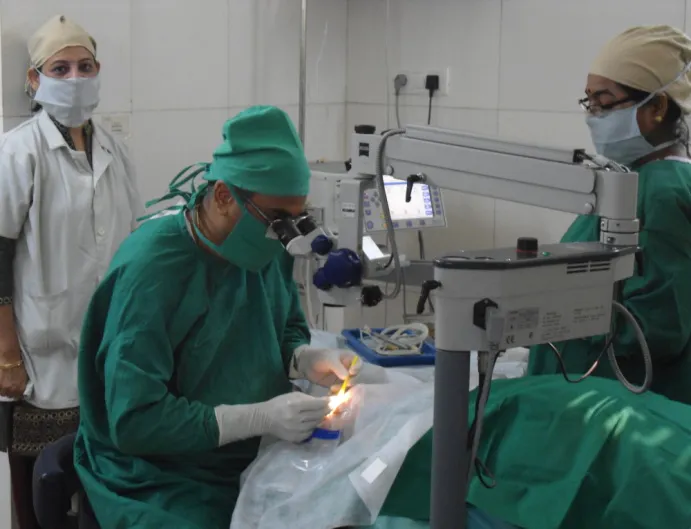
Laser treatment We use precise laser to seal leaking blood vessels and reduce abnormal vessel growth. It's been around for decades and it works. We do this regularly at our clinic.
Anti-VEGF injections These are medicines injected into the eye. Sounds terrifying, we know. But it's done with numbing drops and most patients say they barely felt it. These injections reduce swelling in the macula and can actually improve vision in many cases.
Vitrectomy surgery For advanced cases where there's significant bleeding inside the eye or retinal detachment. This is a more involved procedure but it can save eyes that would otherwise go blind.
The point is treatment exists. Effective treatment. But it works best when we catch the problem early. The further it progresses, the harder it becomes to recover lost vision.
Look, we could write pages and pages about the science of diabetic eye disease. But what actually matters is what you DO with this information. So here's a simple, no-nonsense action plan:
Get that eye exam booked. If you're diabetic and haven't had a dilated eye exam in the last 12 months, please book one with an eye specialist soon. Video consultations are also available.
Control your blood sugar. This is the single biggest thing you can do for your eyes. Work with your physician. Take your meds. Watch your diet. Every point you bring your HbA1c down reduces your risk significantly.
Manage your blood pressure and cholesterol. These aren't just heart problems they directly affect the blood vessels in your retina too.
Stop smoking. If you smoke and have diabetes, you're compounding the damage to your blood vessels. Including the ones in your eyes.
Don't wait for symptoms. We cannot stress this enough. The absence of symptoms means nothing with diabetic eye disease. Regular screening is the only reliable way to catch problems early.
We've been doing this for nearly 30 years at Shree Netra Eye Foundation. Three decades of looking into people's eyes literally.
And the cases that haunt us aren't the complicated ones. They're the simple ones. The ones where someone lost vision because they didn't get a basic eye exam. Where a 20-minute screening could have changed everything.
Diabetes is manageable. Diabetic eye disease is treatable. But only if we find it in time.
Your eyes won't tell you they're in trouble. That's our job. But you have to walk through the door.
So if you're diabetic or if someone you love is please take this seriously. Book an annual eye exam. Make it as non-negotiable as your blood sugar test.
Because the best treatment for diabetic eye disease? Catching it before you even knew it was there.
Eye care center treatments are specialized services aimed at improving and maintaining eye health
Diabetic and skipping eye check-ups? Big mistake. Here's what happens inside your eyes & why regular exams can save your sight.

Understand how glaucoma leads to vision loss. Learn about causes, risk factors, symptoms, angle-closure glaucoma, early detection and treatment options.
Is LASIK surgery safe? Understand laser eye surgery risks & benefits. Learn if laser vision correction with LASIK eye surgery is right for you.