
2026-04-08
Diabetic Eye Disease: Why Regular Eye Exams Matter
Diabetic and skipping eye check-ups? Big mistake. Here's what happens inside your eyes & why regular exams can save your sight.


Understand how glaucoma leads to vision loss. Learn about causes, risk factors, symptoms, angle-closure glaucoma, early detection and treatment options.

Let me tell you something that keeps us up at night.
We've been practising ophthalmology in Kolkata since 1996 - nearly three decades now. And in all these years, there's one pattern we keep seeing at our Ballygunge clinic that genuinely troubles us.
Someone shows up for a routine eye check-up. Maybe they came in because their glasses prescription seemed off. Maybe their daughter insisted. Maybe they just happened to walk past our clinic on Chakraberia Road and thought, "Let me get my eyes checked, it's been a while."
And then during the examination, we find something they never expected.
Glaucoma.
Not early stage. Not borderline. But moderate to advanced damage - damage that could have been caught years earlier if they'd come in sooner.
That's the thing about this particular eye disease. Glaucoma is a condition that doesn't announce itself. There's no dramatic moment. No sudden pain in most cases. No blurry vision that makes you rush to a doctor. It just... quietly chips away at your sight. And by the time you actually notice something's wrong, a significant chunk of your vision is already gone.
Permanently.
So yeah - we take this one personally. And that's exactly why we're writing this post. Not to scare you. But because we genuinely believe that if more people understood how glaucoma occurs, what the risk factors look like, and what they can actually do about it, we'd catch this disease earlier and save a lot more eyesight.
Let's get into it.
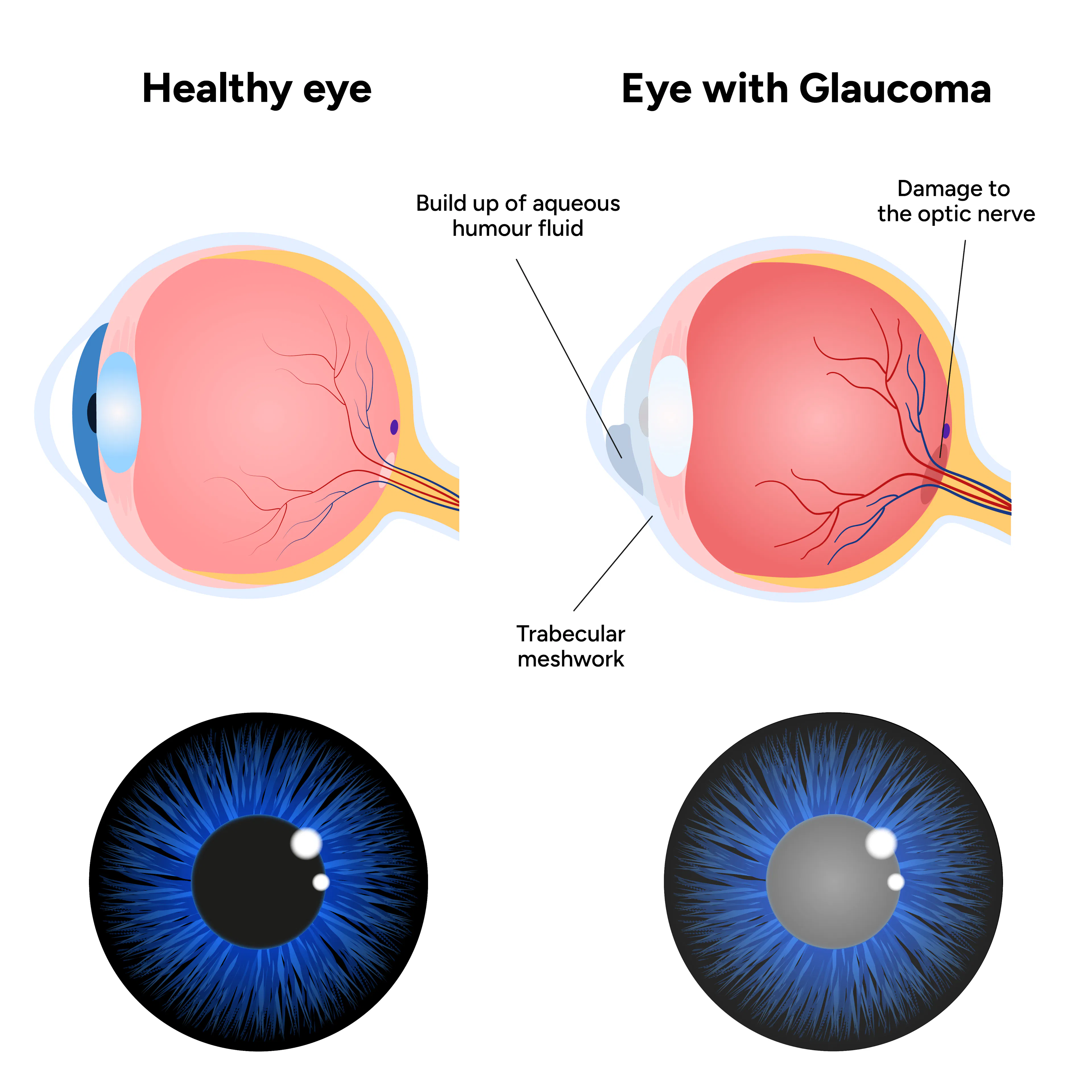
Here's the simplest way to understand it.
Your eyes constantly produce a clear fluid called aqueous humor. This fluid nourishes the front part of your eye and maintains healthy eye pressure. Once it's done its job, it drains out through a tiny drainage system - specifically through something called the trabecular meshwork, which sits near the drainage angle where your iris meets the cornea.
Now here's where problems begin.
When that drainage system doesn't work properly - either because it gets clogged, blocked, or was never formed correctly - the aqueous humor builds up. Pressure inside the eye rises. And that increased eye pressure starts pushing against the optic nerve at the back of your eye.
The optic nerve is basically your eye's data cable to the brain. It carries everything you see. When it gets compressed and damaged over time, you start losing peripheral vision first. Then, if left untreated, the damage to the optic nerve progresses. And eventually, it can cause permanent vision loss.
That's glaucoma in a nutshell. But the reality? It's far more nuanced than that.
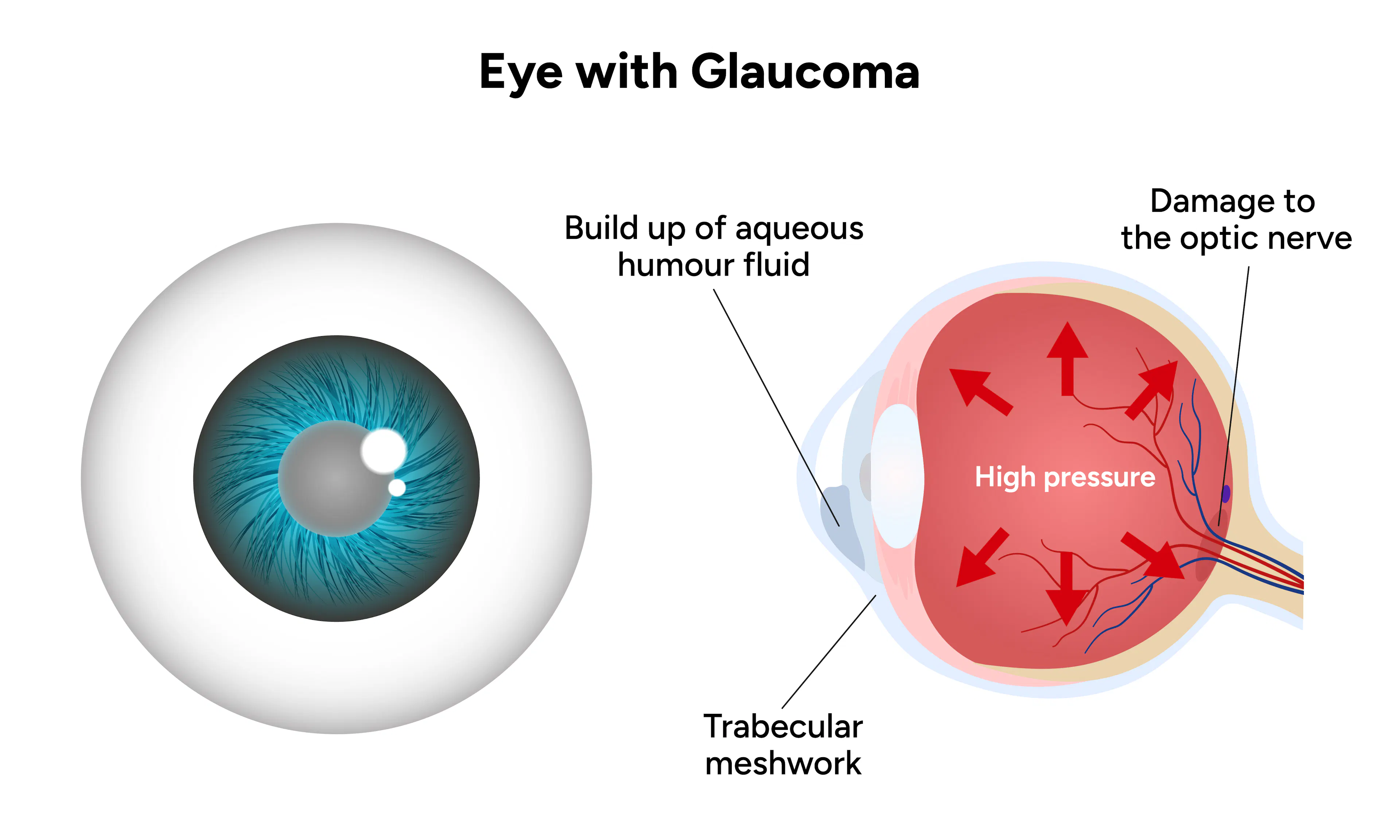
Not all glaucoma behaves the same way. Understanding the type of glaucoma someone has completely changes how we approach diagnosis and treatment. Let me break down the main forms of glaucoma we see.
This is the most common form. And frankly, the most dangerous - not because it's aggressive, but because it's so incredibly sneaky.
With primary open-angle glaucoma, the drainage angle looks open and structurally normal. But the trabecular meshwork isn't filtering fluid as efficiently as it should. Think of it like a drain that's technically open but has years of buildup slowing the flow.
Eye pressure rises gradually. So gradually, in fact, that most people feel absolutely nothing. No eye pain. No headaches. No obvious vision changes - at least not in the beginning.
Blindness from open-angle glaucoma doesn't happen overnight. It's a slow burn. Months, years, sometimes over a decade. And that's precisely what makes it so dangerous. By the time patients notice their side vision fading, the damage is often extensive.
This is the form of open-angle glaucoma we diagnose most frequently here in Kolkata, especially in patients over 40.
Now this one's different. Very different.
Angle-closure glaucoma can develop suddenly - and when it does, it's a medical emergency. We call this acute angle-closure glaucoma, and trust us, it gets your attention.
What happens is the iris physically blocks the drainage angle. Fluid can't escape. Eye pressure skyrockets - fast.
And the symptoms? Unmistakable. Severe eye pain. Headache that makes you nauseous. Blurry vision. Halos around lights. Red eyes. Sometimes vomiting.
Angle-closure glaucoma usually needs immediate treatment. If you experience these signs, don't wait. Don't Google it for an hour. Get to an eye clinic. Seriously.
Primary angle-closure glaucoma is more common in people with naturally narrow drainage angles - which tends to be more prevalent in certain populations, including many South Asian and East Asian communities. It's also more common in women and in farsighted individuals.
Sometimes glaucoma doesn't develop on its own. Sometimes another condition or event sets it off.
Secondary glaucoma can result from eye injuries, inflammation, certain medications (especially long-term steroid use), advanced cataracts, or even previous eye surgeries. In these cases of glaucoma, treating the underlying cause is just as important as managing the eye pressure itself.
One specific subtype worth mentioning - pigmentary glaucoma. This happens when tiny pigment granules from the iris flake off and clog the drainage system. It tends to show up in younger, near-sighted men. Not extremely common, but we do see it.
This one breaks our heart every time.
Some children are born with glaucoma or develop it very early in life. Congenital glaucoma happens when the eye's drainage system doesn't form properly during pregnancy. Babies with this condition may have unusually large or cloudy eyes, excessive tearing, and sensitivity to light.
Early surgery is usually needed. The good news? When caught quickly and treated by experienced paediatric eye specialists, outcomes can be really encouraging.
Here's one that confuses a lot of people - including some doctors, honestly.
In normal-tension glaucoma, the optic nerve gets damaged even though eye pressure readings fall within the "normal" range. The exact reason is still being researched, but reduced blood flow to the optic nerve seems to play a major role.
This is why we always say at our clinic - eye pressure alone doesn't tell the full story. A thorough eye exam that includes optic nerve assessment is non-negotiable.
Let's separate these two because they're often mixed up.
The primary mechanism? Impaired drainage of aqueous humor leading to elevated eye pressure, which results in damage and vision loss at the optic nerve. That's the mechanical piece.
But what can cause glaucoma or lead to glaucoma in the first place?
Sometimes, honestly, we never pinpoint a single cause. Glaucoma develops due to a combination of factors, and each patient's story is slightly different. That's something textbooks don't always capture - but three decades of clinical practice does.
Here's the uncomfortable truth: in the majority of cases of glaucoma - especially open-angle - there are NO early symptoms.
None.
Glaucoma in its early stages is virtually silent. That's not an exaggeration. That's reality.
By the time signs of glaucoma become noticeable, you're already looking at significant, irreversible loss. Peripheral vision goes first. People start bumping into things. They miss objects on one side. Reading feels harder. Driving becomes risky.
For angle-closure types, symptoms include sudden eye pain, blurred vision, nausea, headaches, and seeing coloured halos around lights.
For congenital glaucoma in children, watch for watery eyes, cloudiness in the cornea, unusual eye size, and light sensitivity.
The bottom line? Waiting for symptoms is not a strategy. Regular eye check-ups - especially after 40 - are your best defence.
We always tell our patients - some people carry a higher risk of glaucoma than others. And knowing your personal glaucoma risk factors can literally save your sight.
You should be particularly vigilant if:
We cannot stress this enough. If even one of these applies to you, please don't skip your annual eye check-up. Identifying glaucoma early changes everything.
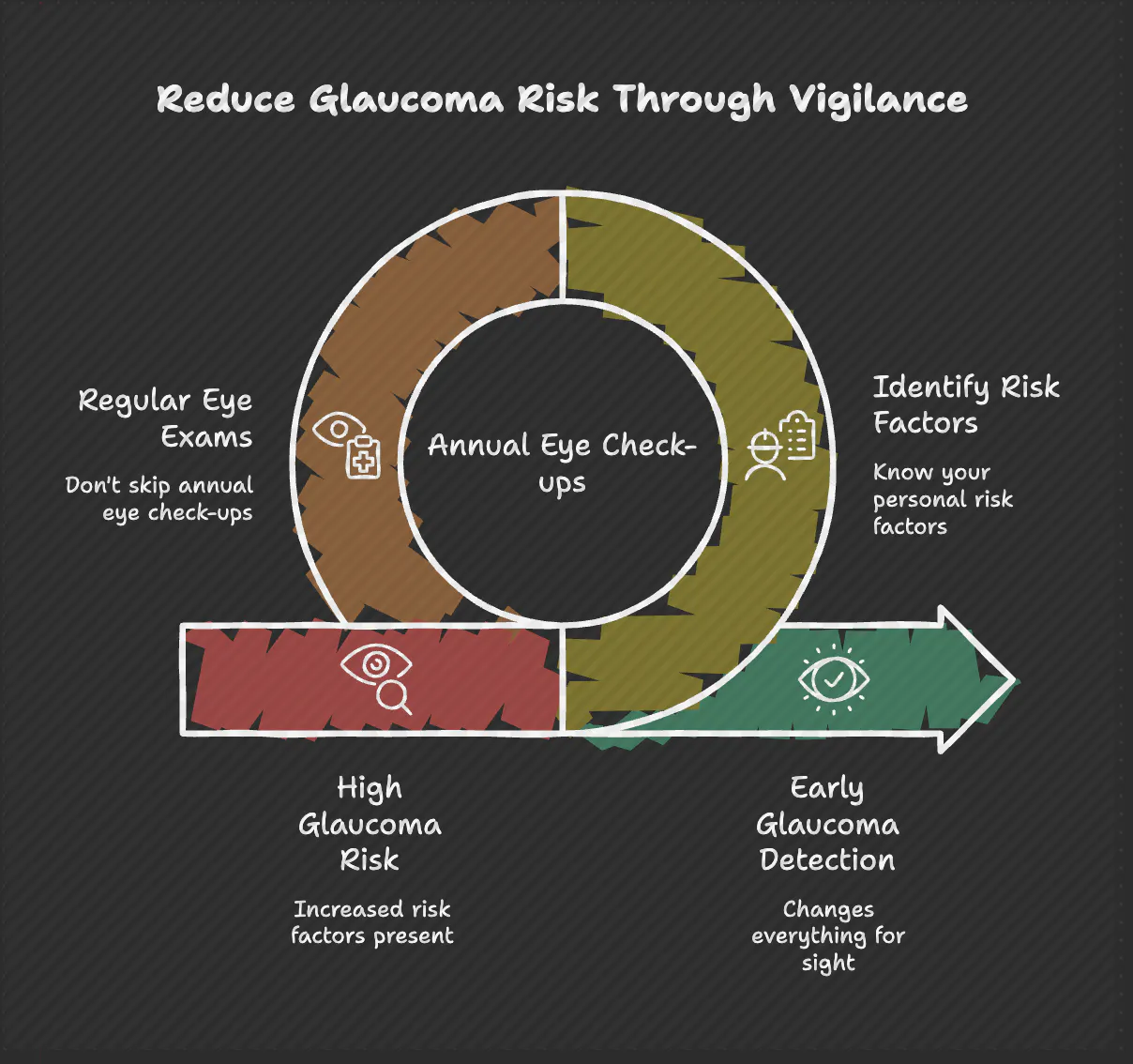
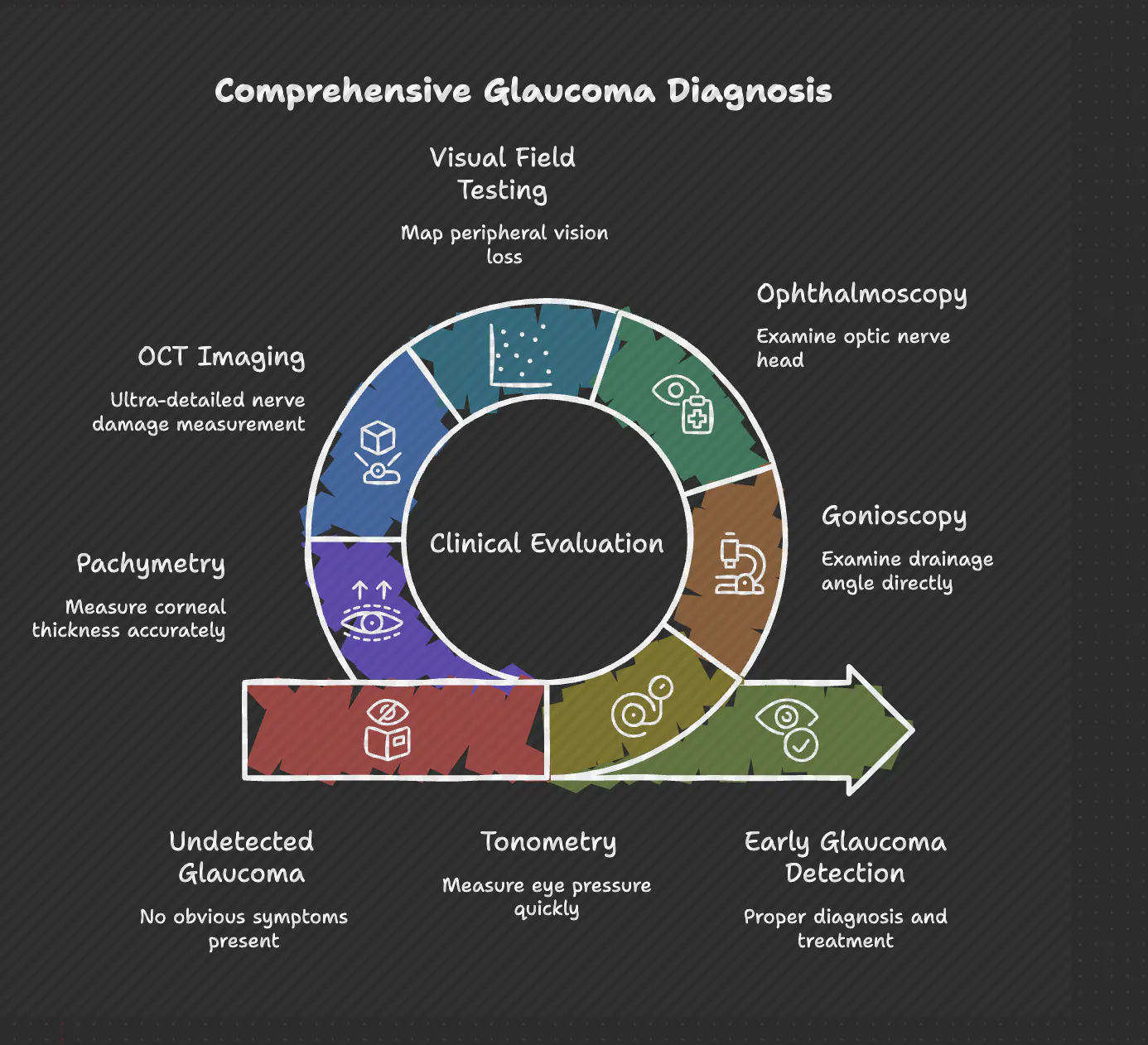
So how do you detect glaucoma when there are no obvious symptoms?
That's where proper clinical evaluation comes in. And this is something we're deeply invested in at Shree Netra Eye Foundation - because glaucoma diagnosis isn't just one test. It's a combination.
Here's what a comprehensive glaucoma evaluation typically involves:
When we combine all of these, we get a pretty complete picture. And that's how we diagnose glaucoma - even before the patient has noticed a single symptom.
Let's be straight with you. There's no cure for glaucoma - not yet. The optic nerve damage that's already happened? That can't be reversed.
BUT - and this is critical - glaucoma treatment can stop or dramatically slow down further damage. And if we catch it early enough, many patients maintain excellent functional vision for the rest of their lives.
Here's what treatment of glaucoma looks like in practice:
For most patients, we start here. Glaucoma eye drops can greatly reduce eye pressure by either decreasing fluid production or improving drainage. You apply them daily. It sounds simple, and it is - but consistency matters enormously. Miss your drops regularly, and the pressure creeps back up.
When drops alone aren't enough, or when compliance is a challenge, laser treatment offers a highly effective middle ground. Procedures like SLT (Selective Laser Trabeculoplasty) for open-angle glaucoma or laser iridotomy for angle-closure types can significantly improve fluid drainage. These are done as outpatient procedures - no hospital stay, minimal discomfort.
For more advanced or resistant cases, surgical intervention becomes necessary. Traditional glaucoma surgeries like trabeculectomy create a new drainage pathway for fluid to escape. Then there are minimally invasive glaucoma surgeries (MIGS) - newer approaches that use tiny devices or micro-incisions to improve drainage with less tissue disruption and faster recovery.
The choice between these treatment options depends entirely on the type and stage of glaucoma, your overall eye health, and how your condition responds to initial treatment.
What we always emphasize to our patients: once you start treatment, staying consistent is everything. Without treatment, glaucoma progression is almost guaranteed. The disease doesn't pause because you forgot your eye drops for a week.
Alright, let's be honest here. You can't always prevent glaucoma entirely - especially if genetics are working against you. Some people are simply wired to develop it.
But here's what you CAN do. You can help prevent severe damage. You can prevent vision loss from reaching a point where it affects your quality of life. You can prevent permanent vision loss by catching the disease before it goes too far.
And that comes down to a few straightforward habits:
If you're diagnosed, follow through. Take your medications. Show up for follow-ups. Ask questions. Be an active participant in managing glaucoma. Your eye doctor can only help if you let them.
We'll leave you with this thought.
Glaucoma is one of the leading causes of blindness globally. But here's the thing - it doesn't have to be. Not anymore.
We have the tools. We have the technology. We have decades of clinical experience. Early detection is not a buzzword - it's the single most powerful weapon against this disease.
At Shree Netra Eye Foundation, we've been serving patients across Kolkata since 1996. And the one factor that consistently separates good outcomes from devastating ones is when the patient walked through our door.
Come in early, and we have options. We can treat glaucoma effectively, preserve your vision, and give you a plan that works for decades.
Come in late, and our hands are tied. We can slow things down, but we can't bring back what's already lost.
So if you're reading this and you haven't had a comprehensive eye exam in the past year - or ever - consider this your nudge. Not a lecture. Not a scare tactic. Just a genuine request from a team of eye care professionals who've spent 30 years watching this disease do its damage.
Eye care center treatments are specialized services aimed at improving and maintaining eye health
Diabetic and skipping eye check-ups? Big mistake. Here's what happens inside your eyes & why regular exams can save your sight.
Understand how glaucoma leads to vision loss. Learn about causes, risk factors, symptoms, angle-closure glaucoma, early detection and treatment options.
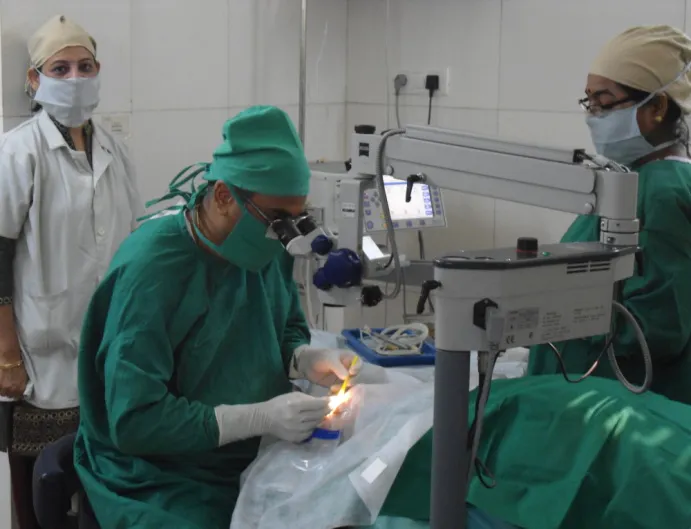
Is LASIK surgery safe? Understand laser eye surgery risks & benefits. Learn if laser vision correction with LASIK eye surgery is right for you.