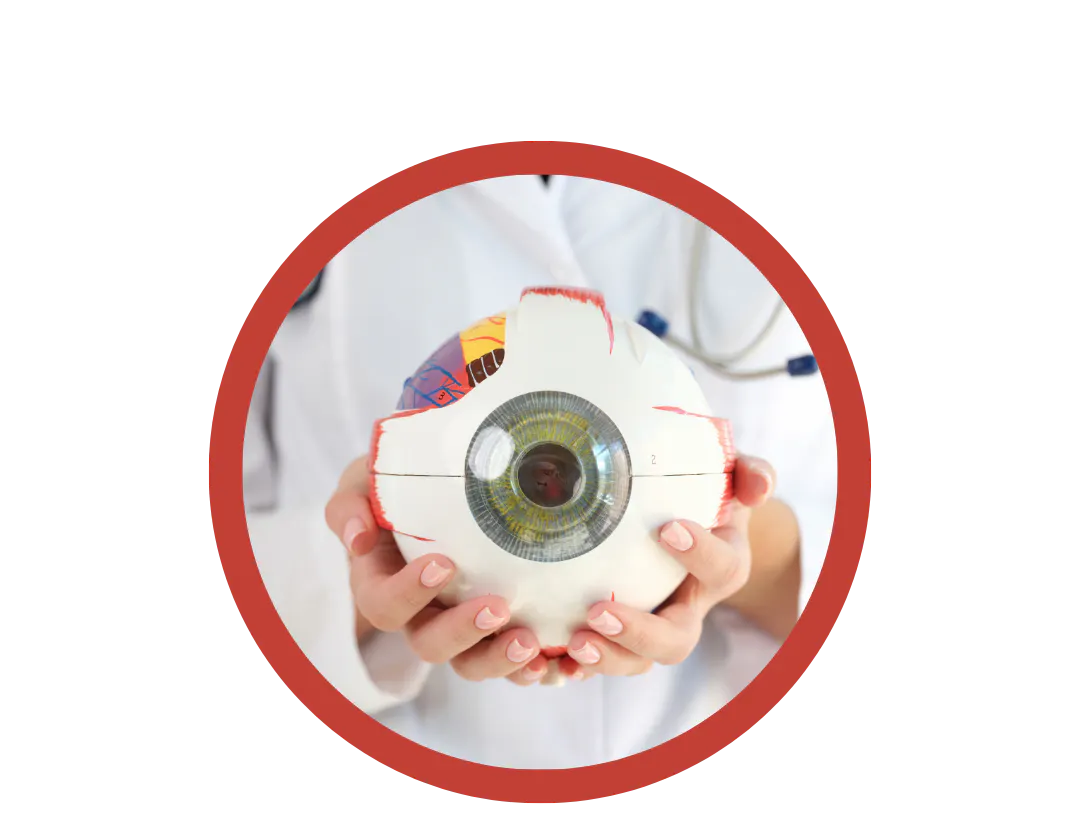
Step 1: Eye Evaluation
Your eyes are examined in detail - including corneal thickness, eye power, and tear film. This helps decide if the procedure is safe for you.

If you’ve been using glasses or contact lenses for a long time, you already know the small inconveniences - fogging, cleaning, carrying backups. LASIK is often considered when people want to move beyond that. It’s a laser-based procedure designed to improve vision by correcting how light enters your eye.
Book an Appointment
Share your details and we'll get back to you
LASIK is a laser-assisted surgery for correction of refractive error. If you are planning or eager to get rid of spectacles and contact lenses LASIK is the answer.
With LASIK, the ophthalmologist uses a laser to reshape the cornea. This improves the way the eye focuses light rays onto the retina, at the back of the eye, allowing for a better vision. Technology that understands your eyes.
LASIK (laser in situ keratomileusis) is an outpatient surgical procedure used to treat nearsightedness, farsightedness, and astigmatism. With LASIK, the ophthalmologist uses a laser to reshape the cornea. This improves the way the eye focuses light rays onto the retina, at the back of the eye, allowing for a better vision. Technology that understands your eyes
Every eye differs from another in several ways. This can be in terms of size, length, shape of one or more parts of the eyeball, changes that occur with age and several more minute details. That’s why we bring you the ZYOPTIX procedure that corrects not just the aberrations caused by structural defects on the surface of your eyes, but also the smaller imperfections specific to your eye.

Most vision issues come down to the shape of your eye. Laser vision correction is specifically designed to correct refractive errors like:
You can read your phone easily, but distant objects - like road signs or faces across the room - appear blurred. This is the most common condition we see. LASIK for myopia is also one of the most commonly performed corrections.
Here, the issue isn’t just clarity - it’s distortion. Vision may look stretched, shadowed, or uneven. This happens when the cornea is not perfectly shaped.
Less common in younger patients, but still present. Nearby objects may feel harder to focus on.

Many people think LASIK is just one single procedure. It’s not. There are different types, and the choice depends on your eye.
This is where expectations meet reality.
Not everyone who wants LASIK is a good candidate - and that’s actually a good thing. Because doing the right procedure for the right patient matters more than doing it quickly.
We look at things like:
Situations Where LASIK May Not Be Suitable
A proper eye examination is essential. Skipping this step leads to problems later.
Sometimes, after evaluation, we tell patients to wait. Sometimes we suggest alternatives.
And honestly - that builds more trust than just saying “yes” to everyone.

The procedure itself is short. Most of the work happens before it.
Swipe to explore
Your eyes are examined in detail - including corneal thickness, eye power, and tear film. This helps decide if the procedure is safe for you.
You’ll lie down comfortably, and numbing eye drops are used. There are no injections, and you stay awake throughout.
A thin flap is created on the cornea. You may feel slight pressure for a few seconds, but it’s not painful.
A laser reshapes the cornea to correct your vision. This step takes only a few seconds per eye.
The flap is placed back gently and settles on its own without stitches.
Right after LASIK, your vision won’t be crystal clear immediately. It improves quickly, but there’s a short adjustment phase.
Some people describe:
By the next day, most patients already notice a big difference.
Within a few days, daily activities become normal again.

Swipe to explore
We don’t rush into surgery. Corneal mapping, measurements, full eye assessment - everything is done first.
Not every patient gets the same type of LASIK. We choose based on what your eye needs.
We explain:
Type of LASIK
Expected outcome
Cost
You decide after understanding.
LASIK is an outpatient procedure. You go home the same day.
Post-surgery visits are scheduled. Healing, pressure, and vision are monitored.
If you need additional care - retina, glaucoma, or even cataract surgery - everything is available here.

A laser eye surgery that reshapes the cornea to correct refractive errors.
No. Numbing eye drops are used.
Around 10–15 minutes per eye.
LASIK can be a great option - but only when it’s the right one for your eyes. Let’s understand your vision needs and guide you step by step.