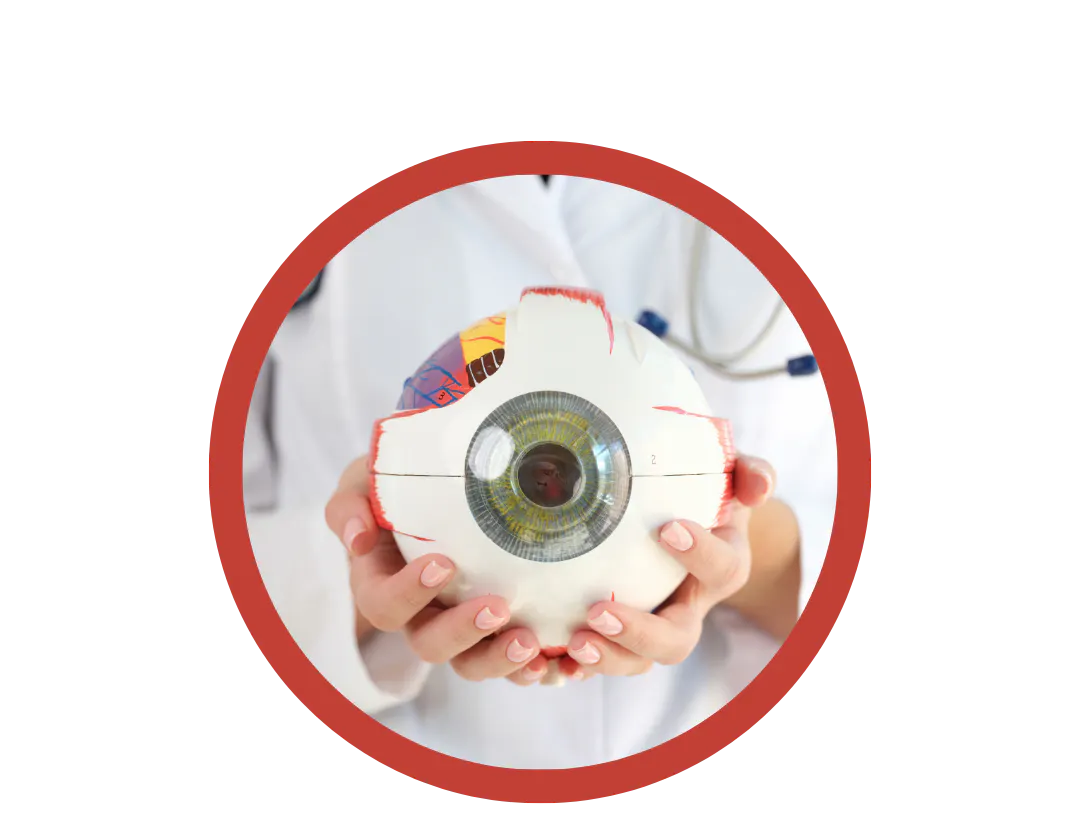
Advanced Cataract Surgery In Kolkata

Cataract is a common eye condition where the natural lens of the eye becomes cloudy, affecting vision. Cataract surgery is a safe and effective procedure where the cloudy lens is removed and replaced with a clear artificial lens to restore vision.

Book an Appointment

Share your details and we'll get back to you

Activities

What Is a Cataract? Why Does Your Lens Become Cloudy?

Behind your iris sits a tiny lens that focuses light onto your retina. It's supposed to be crystal clear. But as you age - usually past 50 - proteins in that lens start clumping. The lens gets foggy. That fog is a cataract.

It isn't something growing over your eye. The natural lens of the eye is actually breaking down from the inside. Ageing drives most cataract formation, though UV exposure, diabetes, smoking, and long-term steroid use can speed things up. Once it starts, it doesn't reverse. The cloudy natural lens is removed during surgery and gets swapped for a permanent artificial lens called an intraocular lens, or IOL. That new lens stays in your eye for life.

0M+

Cataract surgeries done globally each year

0%+

Success rate for modern cataract surgery

0–20 min

How long the surgery takes

Symptoms of Cataract - and When You Actually Need Surgery

Cataracts creep up on you. Most people adjust without realising their vision has been getting worse for months.

✓ Blurry or foggy vision, even with updated glasses

✓ Colours looking faded or yellowish

✓ Glare and halos around lights (night driving gets rough)

✓ Needing more light to read or do close work

✓ Your glasses prescription keeps changing

✓ Double vision in one eye

Early on, stronger glasses or better lighting can help. But when blurry vision starts getting in the way of everyday stuff - cooking, driving, recognising faces across a room - most doctors will recommend cataract surgery. There's no advantage to waiting until the cataract is "fully ripe." Actually, a very dense cataract can make surgery harder.

Our doctors

Type of Cataract - Not All of Them Behave the Same

Nuclear cataracts sit in the centre of the lens. Most common type. Cortical cataracts start at the edges and spread inward, like cracks on a windshield. Posterior subcapsular cataracts develop at the back of the lens, progress faster, and tend to hit people with diabetes more often. Then there's congenital cataract — some babies are born with one. Each type of cataract affects vision differently, and your surgeon needs to know what they're dealing with before picking an approach.

Machine
Cataract Surgery Techniques

Types of Cataract Surgery - 6 Ways to Remove a Cataract

Different cataracts need different approaches. A soft, early cataract and a rock-hard mature one aren't handled the same way. Your surgeon picks the technique based on what they're working with.

Phacoemulsification Cataract Surgery (Phaco)

Most cataract operations today use this. A 2–3 mm cut, then an ultrasound probe goes in to break up the cataract into tiny fragments. Pieces get suctioned out. A foldable intraocular lens slides in through the same small incision. No stitches. Phacoemulsification cataract surgery heals fast because the wound is tiny. This is what most modern cataract centres around the world default to.

Swipe to explore

Phacoemulsification Cataract Surgery (Phaco)

Most cataract operations today use this. A 2–3 mm cut, then an ultrasound probe goes in to break up the cataract into tiny fragments. Pieces get suctioned out. A foldable intraocular lens slides in through the same small incision. No stitches. Phacoemulsification cataract surgery heals fast because the wound is tiny. This is what most modern cataract centres around the world default to.

Micro-Incision Cataract Surgery (MICS)

Same idea as phaco, but the cut is even smaller - under 2 mm. Less tissue gets disturbed, so healing can be a touch quicker. Needs specialised instruments and lenses. Not every cataract qualifies for micro-incision cataract surgery, but for the right candidate, the outcomes are solid.

Manual Small-Incision Cataract Surgery (SICS)

Uses a larger cut (about 6–7 mm) and takes the lens out in one piece instead of breaking it up. No ultrasound machine involved. Manual small-incision cataract surgery is widely used across surgery in India because it doesn't depend on expensive equipment and still delivers good results. Millions of cataract surgeries in India are done this way. Recovery runs a bit longer than phaco, but it's reliable and affordable.

Femtosecond Laser-Assisted Cataract Surgery

A computer-guided femtosecond laser makes the incision, opens the capsule, and softens the cataract before the surgeon removes it. Laser-assisted cataract surgery adds a level of precision to steps that are traditionally done by hand. It's usually recommended when a premium intraocular lens is being placed and exact positioning matters, or in complex cases. Costs more than standard phaco. Whether it's worth the premium depends on your situation.

Extracapsular Cataract Extraction (ECCE)

The surgeon makes a larger opening and pulls the cloudy lens out in one piece, leaving the back wall of the capsule intact to hold the new artificial lens. Manual extracapsular cataract extraction is used when a cataract is too hard or too advanced for phaco to break up safely. Less common now, but some eyes genuinely need this approach. Extracapsular surgery is straightforward - just a bigger incision and a slightly longer recovery.

Intracapsular Cataract Extraction (ICCE)

The oldest method. Removes the entire lens along with its capsule. Intracapsular cataract extraction is rarely used for intracapsular cataract surgery anymore because newer techniques are safer and heal faster. But in unusual cases - a badly dislocated lens, for example - it still comes into play.

Why People Come Here for Their Cataract Operation

Proper Workup Before Anything Else

Medical testing for cataract surgery isn't a checkbox exercise at our clinic. We map the cornea, measure the eye's length, and calculate the right IOL power. Picking the wrong lens ruins the whole point of surgery. So we don't rush this part.

Your Cataract, Your Technique

Phaco for most. SICS when it makes more sense. Laser cataract surgery for complex cases. We pick the method based on your eye, not based on what's fastest for us. The procedure may look different from one patient to the next. That's normal.

Lens Options Without the Sales Pitch

Standard monofocal, multifocal, toric — each lens does something different and costs differently. We explain what each one actually gives you, what it doesn't, and what it'll cost. Then you pick. Nobody's pushing you toward the expensive option.

15 Minutes, Same Day, Go Home

Cataract surgery is an outpatient procedure. Local anaesthesia, no general. Surgery is performed, you rest a bit, and leave with a protective shield. Most patients notice things getting clearer within a few days.

Follow-Up That Actually Follows Up

You'll come back the next day, then again at one week, then a few weeks after surgery. We check healing, lens position, and pressure. If something's off, we catch it early. That's the whole point of follow-up.

Everything Else Your Eyes Need, Right Here

Glaucoma? Retina issue? Need both checked alongside your cataract? We handle all of it in one place. No bouncing between clinics across the city.

Step-by-Step Cataract Surgery — What Happens From Start to Finish

Step 1:

Eye Exam and Testing Your surgeon checks your eye, grades the cataract, and runs measurements to calculate the right intraocular lens power. If you have diabetes, glaucoma, or any other eye condition, it gets factored in. You'll also decide on which type of lens fits your daily needs - reading, driving, screen work.

Swipe to explore

Step 1:

Eye Exam and Testing Your surgeon checks your eye, grades the cataract, and runs measurements to calculate the right intraocular lens power. If you have diabetes, glaucoma, or any other eye condition, it gets factored in. You'll also decide on which type of lens fits your daily needs - reading, driving, screen work.

Step 2:

The Surgery Numbing eye drops go in (no needle in most cases). Small incision. Ultrasound or laser breaks up the cataract. Fragments come out. New lens goes in. Done. Cataract surgery takes about 15–20 minutes. If both eyes need surgery, the second surgery in one eye gets scheduled a couple of weeks after the first one heals.

Step 3:

First Few Days Vision's blurry right after — that clears up quickly. Most people see a real difference within a few days after surgery. You'll use prescribed eye drops for infection and inflammation. Don't rub the eye, skip heavy lifting, stay away from dusty places and swimming pools for a couple of weeks following the surgery.

Step 4:

Full Recovery Full recovery from cataract surgery takes about four to six weeks. Your final glasses prescription comes roughly a month later, once the eye settles. Your surgeon sees you at scheduled intervals — days after surgery, then weeks after surgery — to make sure everything's tracking properly.

Things Looking Fuzzy? Don't Wait It Out.

Cataracts only get worse. They never clear up on their own. If reading, driving, or even watching TV has gotten harder than it used to be, that's your cue. A check-up takes 30 minutes and tells you exactly where things stand.

More details
CTA image

Complications of Cataract Surgery, Recovery Times, and What It Costs

Complications During Surgery - What Can Go Wrong

Cataract surgery is highly safe, though rare risks like infection or a hazy membrane may occur and are easily managed. Your surgeon reviews your medical history beforehand to minimize these complications and ensure you are fully informed.

Recover from Cataract Surgery - Realistic Timelines

Recovery timelines range from a few days to several weeks depending on the surgery type, though full healing typically takes four to six weeks. Regardless of the method, following eye drop schedules and activity restrictions is essential for a smooth recovery.

Cataract Surgery Cost - What Drives the Price Up or Down

Cataract surgery costs in India vary from ₹15,000 to ₹1,50,000 based on the lens and technique selected. We provide a transparent, upfront price breakdown to ensure there are no hidden charges on your discharge day.

Aloke Kumar Banerjee
Jayshree Mimani
Monisha Sen
Supriya Bhutoria
Shaina Middya
Sarah Baptist
Sougata Paul
Indrani Paul
Testimonial

What Our Patients Say About Us

Discover patient experiences at Shree Netra Eye Foundation. See how our trusted eye care services in Kolkata have helped patients protect their vision.

  • Laila Bhaidani
    Verified Patient Story

    Laila Bhaidani

    Mumbai

  • Arya Show
    Verified Patient Story

    Arya Show

    Patna

  • Chinmayee Roy
    Verified Patient Story

    Chinmayee Roy

    Siliguri

  • Shrayoshree Dhar
    Verified Patient Story

    Shrayoshree Dhar

    Kolkata

  • Aloke Kumar Banerjee
    Verified Patient Story

    Aloke Kumar Banerjee

    Patient Review

  • Akash Choudhury
    Verified Patient Story

    Akash Choudhury

    Patient Review

  • Preeti Gupta
    Verified Patient Story

    Preeti Gupta

    Patient Review

  • Ankit Banka
    Verified Patient Story

    Ankit Banka

    Patient Review

  • BHAWNA BACHHAWAT
    Verified Patient Story

    BHAWNA BACHHAWAT

    Patient Review

  • Jayshree Mimani
    Verified Patient Story

    Jayshree Mimani

    Patient Review

  • Monisha Sen
    Verified Patient Story

    Monisha Sen

    Patient Review

  • Supriya Bhutoria
    Verified Patient Story

    Supriya Bhutoria

    Patient Review

  • Shaina Middya
    Verified Patient Story

    Shaina Middya

    Patient Review

  • Sarah Baptist
    Verified Patient Story

    Sarah Baptist

    Patient Review

  • Sougata Paul
    Verified Patient Story

    Sougata Paul

    Patient Review

  • Indrani Paul
    Verified Patient Story

    Indrani Paul

    Patient Review

  • Feroza Khatoon
    Verified Patient Story

    Feroza Khatoon

    Patient Review

  • Md Atif Iqbal
    Verified Patient Story

    Md Atif Iqbal

    Patient Review

  • Vasundhara Joshi
    Verified Patient Story

    Vasundhara Joshi

    Patient Review

_Dr. Vedang Shah cta